

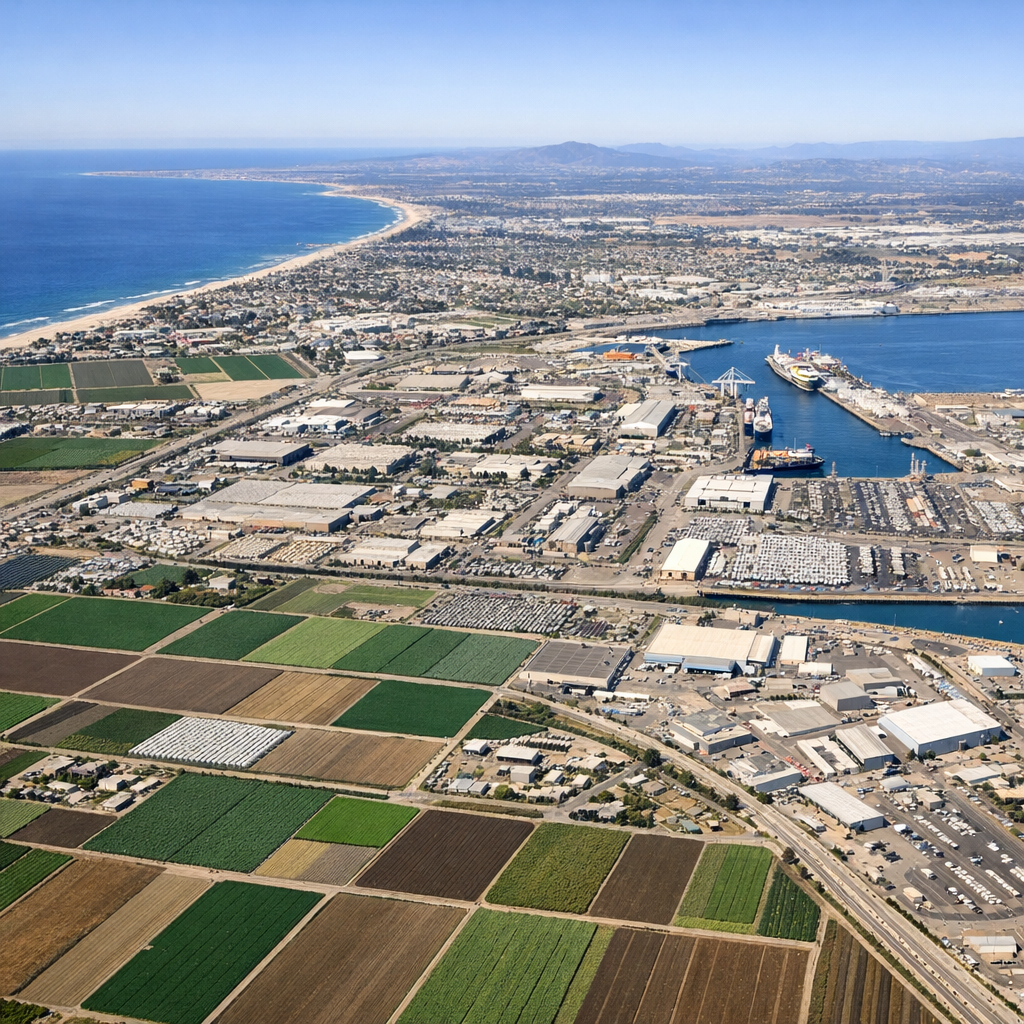
Oxnard, California, boasts a multifaceted economy driven by agriculture, manufacturing, tourism, and international trade. This article provides an in-depth look at the city’s economic landscape, highlighting key industries, employment trends, and economic contributions.
Agriculture: The Backbone of Oxnard’s Economy
Situated on the fertile Oxnard Plain, the city is a significant agricultural hub. The region is renowned for producing strawberries and lima beans, contributing substantially to California’s agricultural output. Agricultural production, including crop cultivation and livestock operations, generates over $2.1 billion annually, representing the largest single economic sector in Oxnard.
Manufacturing and International Trade
Oxnard serves as a manufacturing center within the Greater Los Angeles Area. The Port of Hueneme, the only deep-harbor commercial port between Los Angeles and San Francisco, plays a pivotal role in international trade. Companies such as Del Monte Foods, Chiquita, BMW, Land Rover, and Jaguar utilize the port, facilitating significant economic activity. The port moves over $7 billion in cargo annually, supporting over 5,000 direct, indirect, and induced jobs, and influencing an additional 3,824 jobs.
Tourism: A Growing Economic Driver
Tourism continues to be a powerful economic engine in Oxnard. In Ventura County, tourism spending totaled $1.95 billion in 2025, supporting 16,790 local jobs and generating $172.4 million in state and local tax revenue. This underscores tourism’s vital role in powering the local economy and funding essential services such as public safety, infrastructure, and parks.
Employment and Economic Indicators
As of May 2026, the Oxnard-Thousand Oaks-Ventura metropolitan area reported a civilian labor force of approximately 417,900 individuals, with an unemployment rate of 3.9%. The median household income in Oxnard stands at $93,372, which is 24% above the national median. However, the city faces challenges with a higher unemployment rate compared to the national average, indicating areas for economic improvement.
Conclusion
Oxnard’s economy is characterized by its diversity and resilience, with agriculture, manufacturing, tourism, and international trade serving as key pillars. While the city enjoys a robust economic foundation, ongoing efforts are essential to address employment challenges and ensure sustainable growth for the community.