
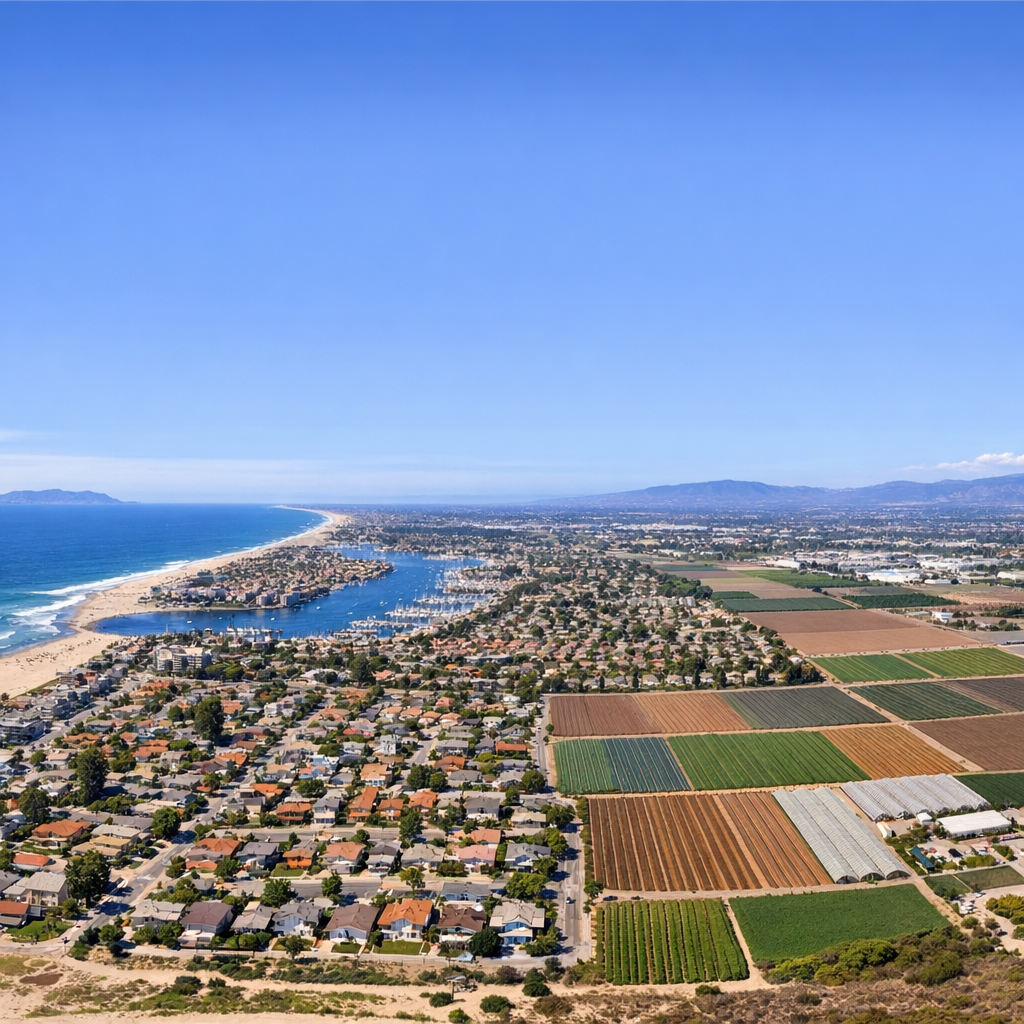
Oxnard, California, boasts a warm-summer Mediterranean climate, characterized by mild, wet winters and warm, dry summers. This climate offers residents comfortable living conditions year-round, with average temperatures ranging from 47°F to 74°F and approximately 300 days of sunshine annually.
Seasonal Weather Patterns
During the summer months, from July to October, Oxnard experiences average high temperatures above 72°F, with August being the warmest month, averaging a high of 73°F and a low of 60°F. The cool season spans from December to April, with average daily highs below 66°F. January is typically the coolest month, with an average high of 65°F and a low of 46°F.
Precipitation is concentrated in the winter months, with January and February receiving the highest average rainfall of approximately 2.8 to 2.98 inches. In contrast, the summer months are notably dry, with minimal rainfall.
Environmental Considerations
Oxnard’s coastal location and agricultural prominence present unique environmental challenges. The city has faced issues such as seawater intrusion into the Oxnard Plain Groundwater Basin, primarily due to over-pumping of groundwater. This intrusion can lead to increased salinity in freshwater resources, affecting both agricultural productivity and drinking water quality.
Additionally, the presence of multiple fossil-fuel power plants has raised concerns about air quality and pollution. The California Environmental Protection Agency has identified Oxnard as a city burdened by multiple sources of pollution, leading to ongoing discussions about environmental justice and sustainable development.
Community Initiatives
In response to these challenges, the City of Oxnard has implemented various initiatives aimed at environmental protection and sustainability. Efforts include stormwater management programs to prevent runoff pollution, regular environmental monitoring, and adherence to the California Environmental Quality Act (CEQA) to ensure that development projects consider environmental impacts.
Residents are encouraged to participate in community clean-up events, report illegal dumping, and adopt practices that reduce pollution, such as proper disposal of hazardous waste and minimizing water usage to combat drought conditions.
Understanding Oxnard’s climate and environmental landscape empowers residents to make informed decisions and contribute to the city’s sustainability efforts. By staying informed and engaged, the community can work together to preserve the natural beauty and health of Oxnard for future generations.